
What Handmade Fragrances Actually Means…to Us
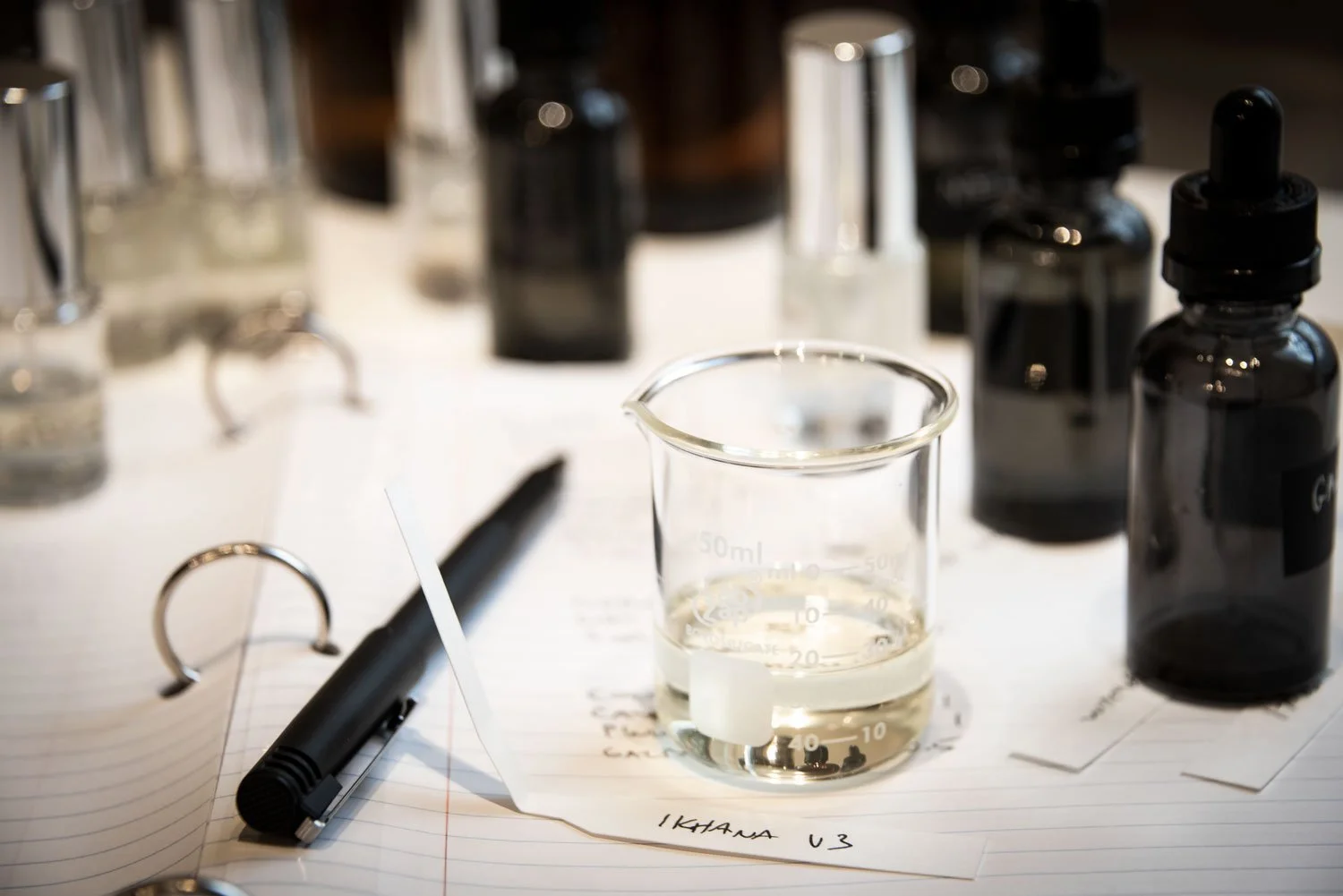
Development of i’khana eau de parfum
There is a moment, before any blending begins, before a single raw material is weighed or a formula sketched out, where the work of making a handmade fragrance actually happens. It happens in a chair, in a quiet room, with every outside distraction closed out. You sit with a concept. You visualize a place, a geography, a quality of light and air. You imagine what that place smells like at its most honest, not its most flattering. That moment is the work. Everything that follows is execution.
I have been thinking about this because the phrase handmade fragrance gets used a lot, and I am not always sure people mean the same thing when they say it. For some it means a small batch. For some it means a bottle touched by human hands rather than a machine. Those things are fine. But they are not the point. The point is whether the person making the fragrance has something to say, and whether they have done the slow, unglamorous work of figuring out what that is before they start reaching for materials.
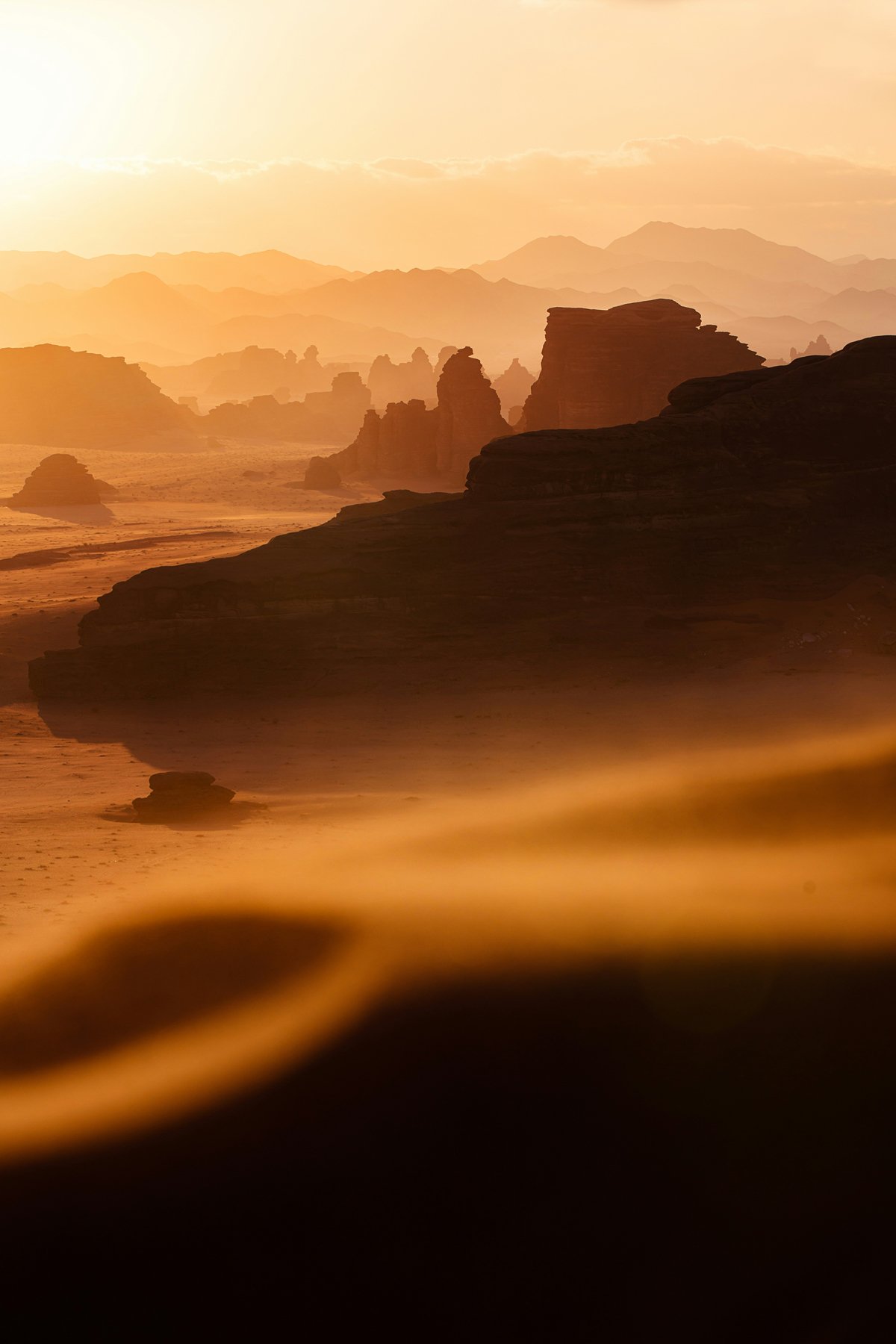
With nahasá, our most recent perfume creation, we spent well over a year thinking before we began building accords. A full year. Other fragrances came to market in that time, other work filled the calendar, but nahasá sat quietly in the background of everything, accumulating. We were visualizing the desert. Not a generic, cinematic desert but a specific one, with its own native culture, its own botanical vocabulary, its own spiritual and medicinal and carnal registers. We were asking what scents, textures, and movements belonged to that place in a way that felt true rather than decorative.
That question is the whole game.
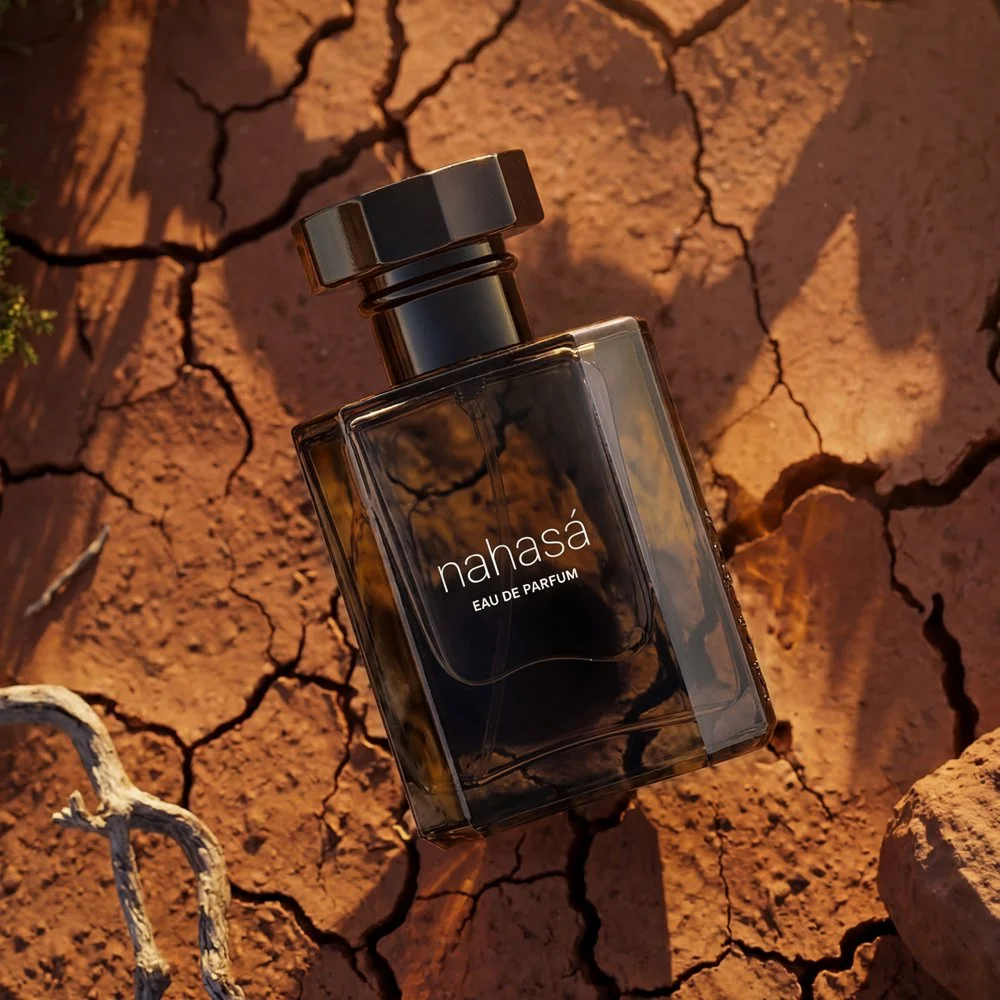
When we finally began composing the facets of nahasá, the ingredients started to define themselves, but only because we had already done the thinking. Desert florals that are drier and spicier than anything you would find in a garden. Woods and spices with texture, with something almost talcum-like and ancient in them. Herbs that evoked ceremony and medicinal practice rather than a kitchen. Animal hide and musk notes that revealed the carnal, physical side of the landscape. None of these were chosen because they are fashionable. None were chosen because a trend report suggested desert is having a moment. They were chosen because they narrate the place. Because they feel like they belong there.
Someone once asked me whether the animalic notes felt like a risk. Honestly, no. Musk and animalic materials are common in perfumery. There are no bad notes, mostly. There is only poor blending, poor balance, and the absence of a reason for a note to be there. When a note is true to the story you are telling, it does not feel risky. It feels necessary.
What actually frustrates me, and I will say this plainly, is independent or artistic fragrance without a point of view. That is the real problem. Not handmade versus commercial. Not small batch versus large production. The problem is when a house positions itself as niche or independent and then simply replicates what is already selling in the mainstream market. I see it constantly. It is, as someone once put it, “boring rather than bad, and boring is worse.”
The way I think about it, there are three things that define genuine independent perfumery. Quality of ingredients. A distinct point of view. And the skill to blend and balance notes and accords into something unique but wearable. When all three are present, the fragrance earns its place. When any one of them is missing, especially the point of view, you are left with a marketing exercise dressed up as a passion project.
I think the trap happens because originality is genuinely risky. It is much safer to make something that resembles what is already working in the market. Safe sales over originality. I understand the logic, even if I find the result uninteresting. The houses that fall into it are not necessarily cynical. Some of them simply never did the slow work of sitting quietly with a concept long enough to find out what they actually believe about it.
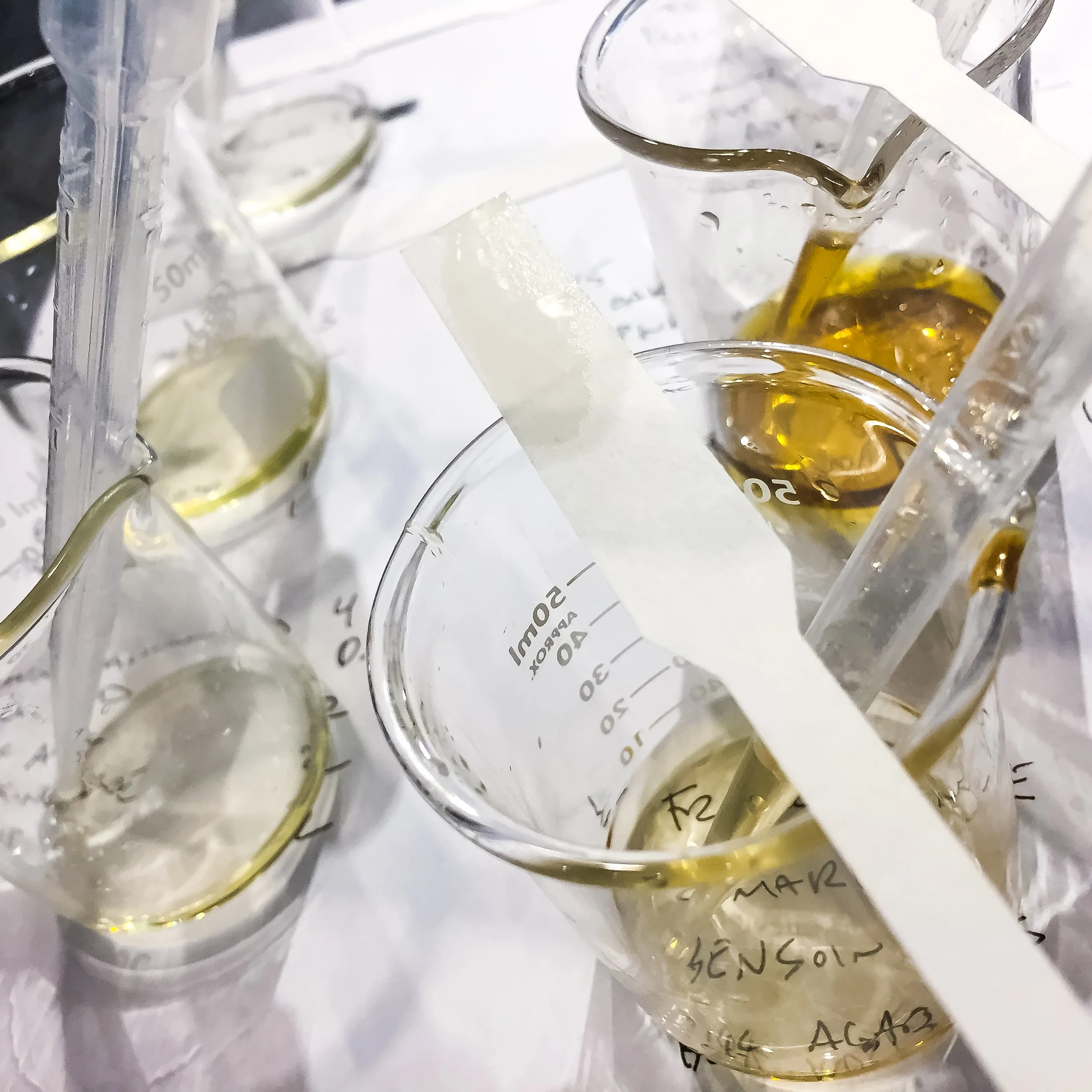
That quiet sitting is what I mean when I talk about handmade fragrance. Not the physical act of blending, though that matters too, and the skill required there is real. I mean the prior work of immersing yourself in a story, a location, a set of cultural and botanical and sensory truths, until the fragrance begins to compose itself in your imagination before a single material is opened. The ingredients then do not feel like choices. They feel like discoveries.
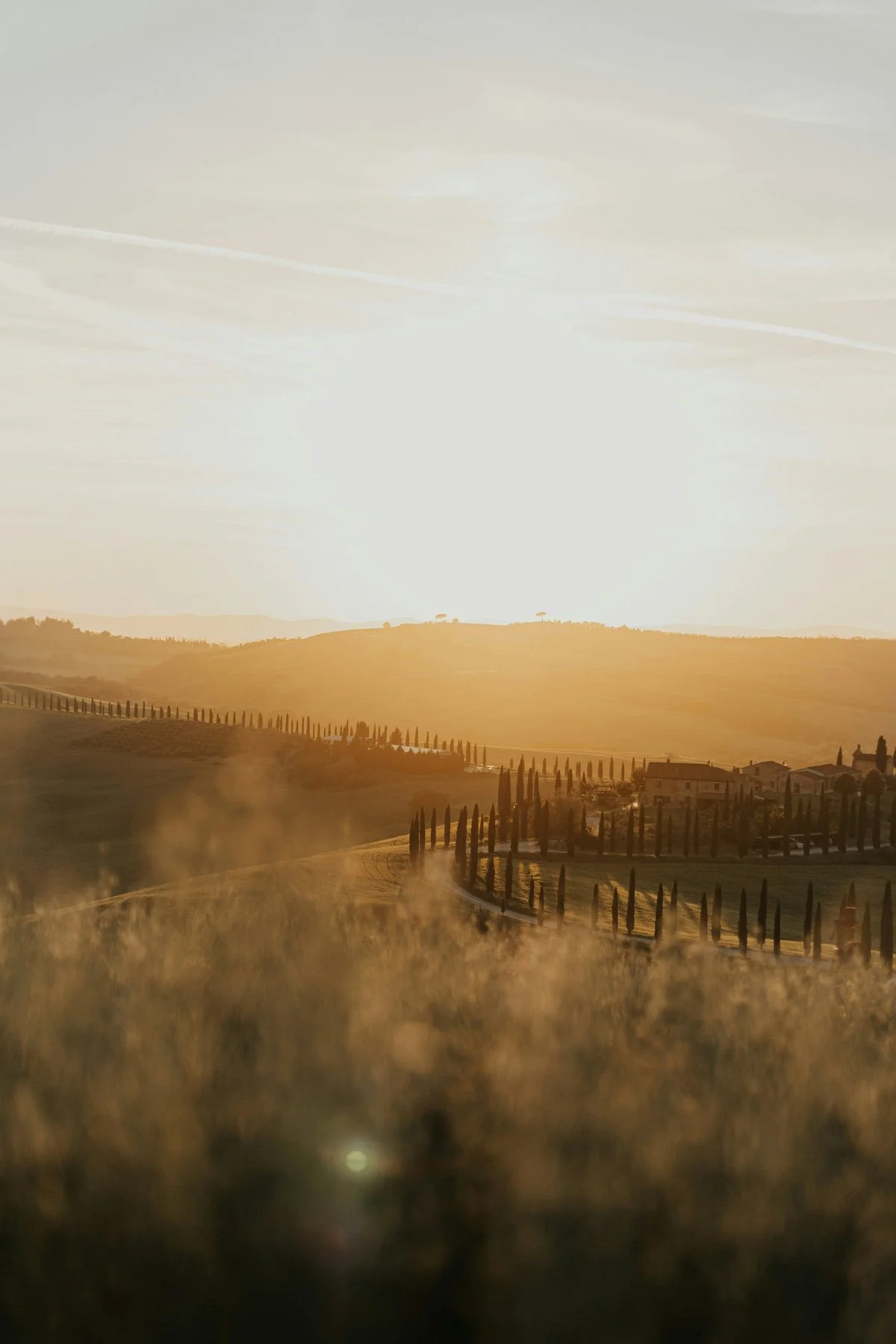
We are always the authors of our fragrances. That is the only position that makes sense to me. Authors do not write by committee with trend reports. They write from a place of accumulated observation and conviction. The Tuscan hills outside our door, the desert we carried in our minds for a year before nahasá took shape, these are not backdrops. They are collaborators. The botanicals narrate. We listen, and then we blend.
If you have been thinking about what separates a fragrance that stays with you from one that simply smells pleasant and forgettable, I would love to hear where you land on that. It is a question I keep returning to.